

Ethical AI and Neurodivergent Empathy: Why Your Perspective Matters
- Mentra

- 3 days ago
- 3 min read

AI ethics is often discussed in abstract terms — bias, fairness, transparency, accountability. But at its core, ethical AI is about empathy. It’s about understanding how systems impact people, where harm can hide in the details, and how decisions ripple across real communities. And this is where neurodivergent professionals often bring something uniquely valuable.
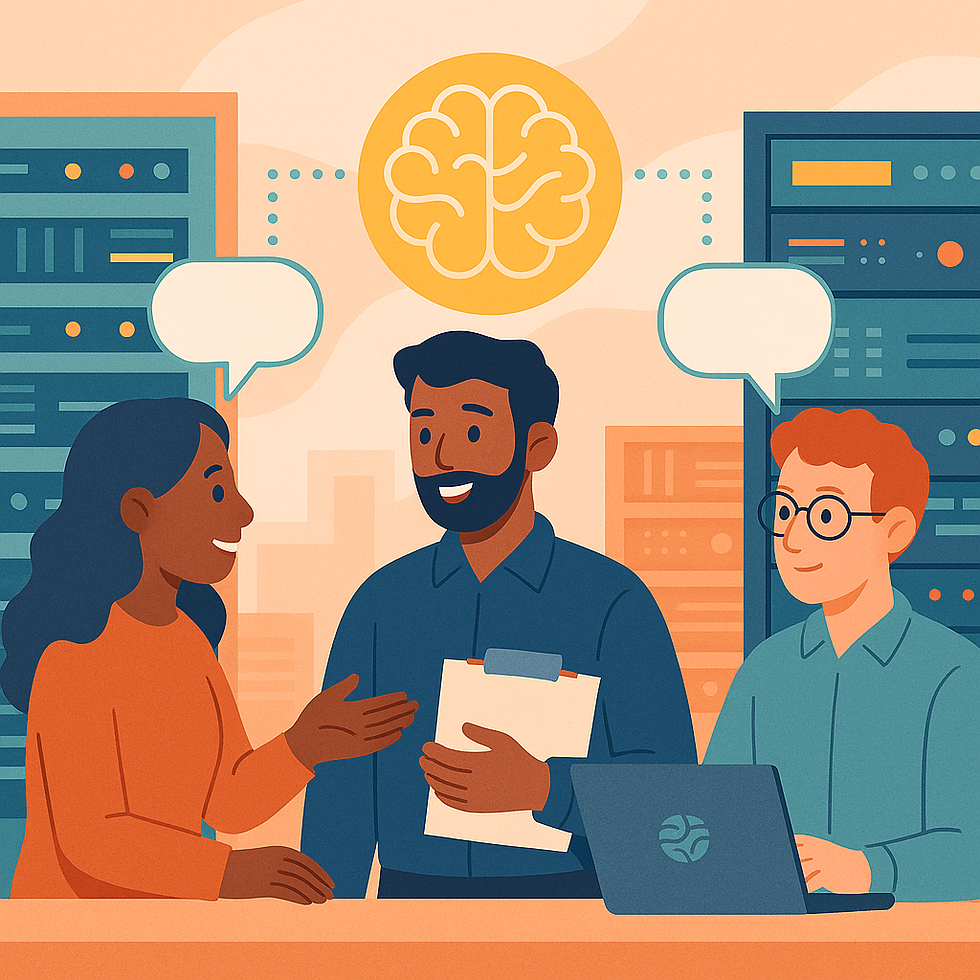
ND minds tend to notice patterns others overlook, question defaults others accept, and empathize in ways that aren’t always loud — but are deeply thoughtful. Ethical AI needs people who can see what’s missing, who can challenge assumptions, and who care about the invisible edge cases. Those aren’t “soft” skills. They’re the foundation of responsible AI.
Ethical AI Begins with Noticing the Overlooked
Every AI system is shaped by its data — and data always reflects the world imperfectly. Bias doesn’t just appear in obvious ways. It hides in:
how samples are selected
which features are included
which groups are underrepresented
what historical patterns get encoded as “truth”
Many ND professionals naturally notice irregularities, inconsistencies, and outliers. That instinct is invaluable when designing ethical systems. You’re not just looking at the model; you’re seeing the social structure beneath the model.
ND Empathy Often Runs Deep — Even if It Looks Different
Empathy in AI ethics isn’t just about emotional expression. It’s about perspective-taking: imagining how a system affects someone who isn’t in the room. Many neurodivergent people do this instinctively. They think deeply, reflect carefully, and often feel strongly about fairness and clarity.
In ethical AI, this leads to questions that change outcomes:
Who might this model misclassify?
What happens when the edge case becomes the norm?
What assumptions are we making about “typical” users?
These questions prevent harm long before it occurs.
System Thinking Helps Expose Hidden Risks
Ethical concerns rarely appear in one place. They emerge from the interactions between data, design, users, and institutions. ND professionals — especially those with systems-oriented cognition — are adept at mapping how different pieces connect.
This helps teams catch risks early:
feedback loops that reinforce inequality
model drift that disproportionately harms specific groups
optimization choices that prioritize convenience over humanity
Seeing the system clearly helps teams build better, safer technology.
Your Perspective Makes Data Teams More Accountable
Ethical AI isn’t created by checklists. It’s created by diversity — of thought, of experience, of cognitive style. Neurodivergent voices disrupt groupthink. They raise uncomfortable but necessary questions. They push teams to justify assumptions. They notice when something “feels off,” even when the metrics look good.
And in a field where consequences can be significant — hiring, healthcare, finance, policing — those perspectives aren’t optional. They’re essential.
Ethical AI Needs People Who Care About the Edges
Models work well for the majority of cases. Ethical AI is about the minority — the edge conditions, the exceptions, the patterns that don’t fit. ND professionals who naturally gravitate toward anomalies and inconsistencies are often the ones best equipped to protect those edges.
Your voice in the room can change the direction of an entire system.
FAQ Schema
Why are neurodivergent professionals valuable in ethical AI?
They notice patterns, challenge assumptions, and bring deep empathy to edge cases.
Do you need formal ethics training to contribute?
No. Critical thinking, pattern recognition, and thoughtful questioning go a long way.
Does ethical AI require advanced math?
Not necessarily. It requires awareness, communication, and a systems mindset.
What’s the biggest risk of ignoring diversity in AI development?
Harmful systems that reinforce bias, overlook real users, and make decisions without accountability.


ND minds tend to notice patterns others overlook, spanish dictionary question defaults others accept, and empathize in ways that aren’t always loud — but are deeply thoughtful.